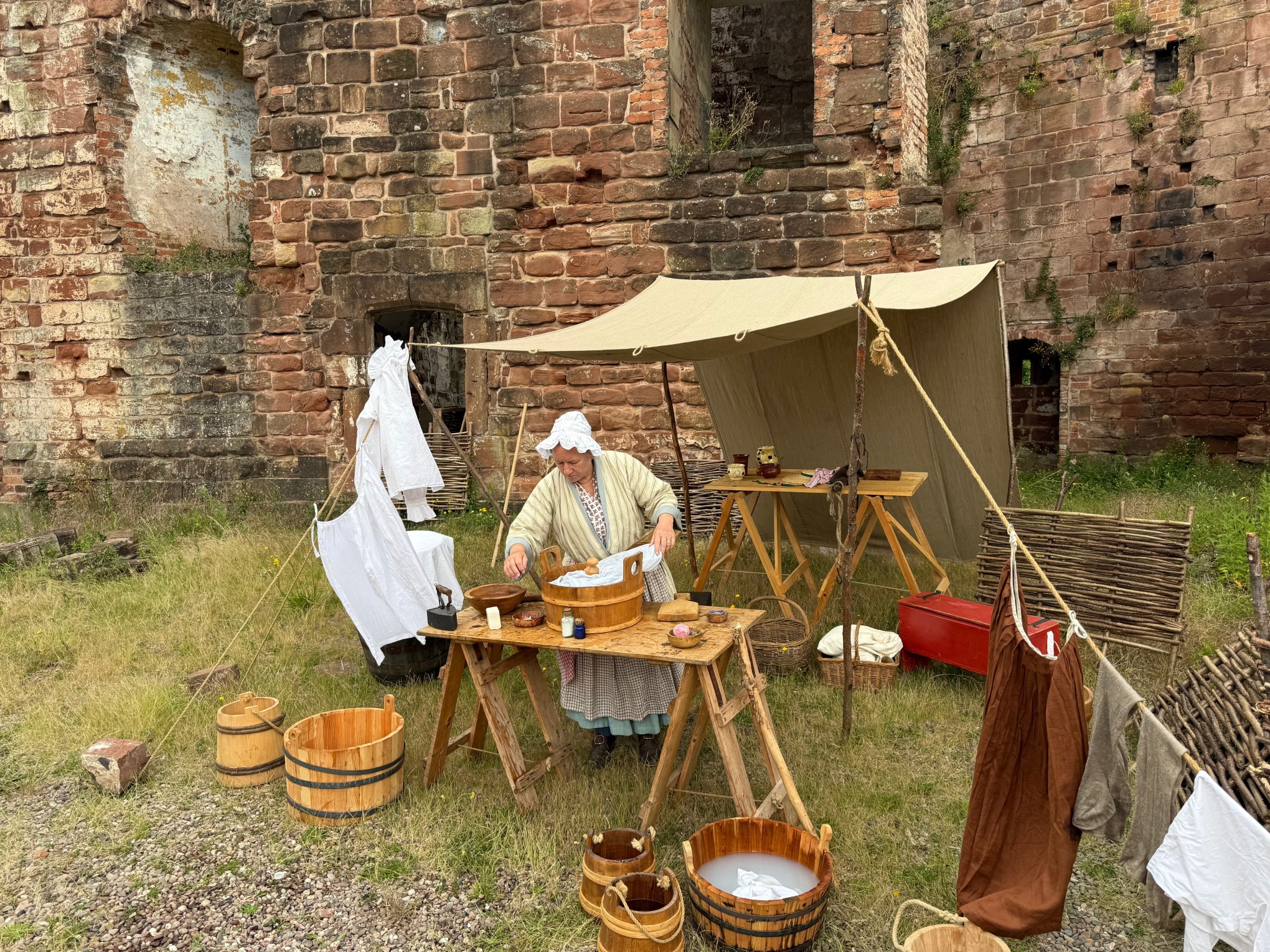
Chester Castle was built around 1070 by the second Earl of Chester, Hugh d’Avranches, presumably as part of his ongoing battle with the Welsh. It has been in more-or-less continuous military use from the time of the Normans until comparatively recently. It was a Royalist stronghold during the English civil war and the home of the Cheshire Regiment during the First World War. It occupies the high ground at the south-western corner of Chester, right on the city walls, overlooking the river and the racecourse. The castle is in the care of English Heritage, run by volunteers and only open at weekends. It’s one of those strange, wonderful pieces of history that form the backdrop to our lives but which we rarely pay attention to. It gives the air of being a ruin on a hill, brooding over the city, but not really part of city life.
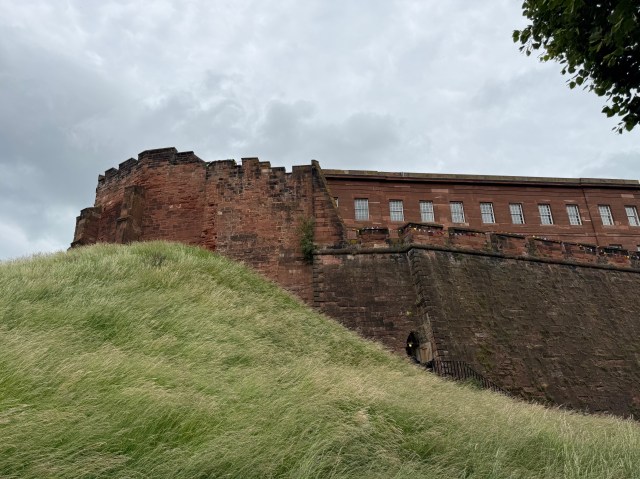
I often walk around Chester’s famous Roman walls and, having passed the racecourse, walk beneath the castle, on the stretch of walls that runs down to the river on the west side of the city. I always look up at the castle (you can’t really miss it) but don’t think of it as being particularly accessible. The main entrance is on a roundabout at the edge of the city and not something you would normally pass on foot. However, there is a less obvious point of access directly from the city walls that is sometimes open, especially on the few weekends each year when the English Heritage volunteers put on an event. This morning, as Janet and I walked the walls, we saw there was a Georgian Fayre being reenacted and we took the opportunity to have a proper look around, which was well worth the detour.
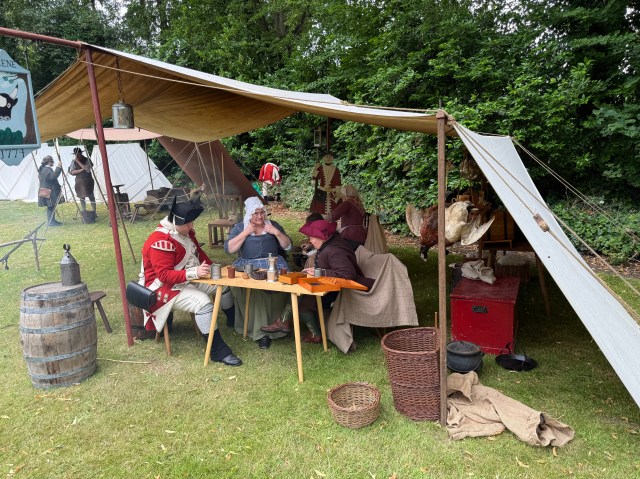
The volunteers were doing a wonderful job of bringing our heritage to life. There was a chap showing off his collection of muskets; a washer-woman doing the laundry; and this lovely scene of a soldier taking refreshment. I’m so glad we stopped and looked in on this event. It was an unexpected connection with our shared past and very much to be treasured.
 This may be of interest ..